

The most loved Chinese remedies for a sore throat are gentle, sweet and moistening. Think a spoonful of Nin Jiom Pei Pa Koa loquat syrup stirred into warm water, a pot of Asian pear tea simmered with rock sugar, a cup of monk fruit tea, or a Golden Throat lozenge tucked in your pocket. Each one is traditionally used to soothe and coat a dry, scratchy throat.
Most of us grew up with at least one of these in the kitchen cabinet. In this guide we walk through where each remedy comes from, which one suits which kind of throat, and two simple recipes you can make tonight with dried pear and monk fruit. We also cover the signs that mean it is time to skip the tea and call your doctor.
Quick answer
- Nin Jiom Pei Pa Koa loquat syrup is the classic Chinese throat syrup, taken off the spoon or stirred into warm water.
- Asian pear simmered with rock sugar is the go-to kitchen remedy for a dry, scratchy throat, and dried pear slices make it easy any time of year.
- Monk fruit (luo han guo) tea is naturally sweet and is traditionally used to moisten the throat, which makes it a favorite after a long day of talking.
- Golden Throat lozenges and the Healthy Throat Combo are easy to carry for comfort on the go.
- Platycodon root and fritillary syrups are traditionally used when a throat feels both dry and full of sticky phlegm.
- See a doctor for a high fever, trouble swallowing or breathing, white patches on the tonsils, or a sore throat that gets worse after a few days.
How does Chinese medicine look at a sore throat?
In Chinese medicine the throat is the gateway to the Lung system, and the Lung likes to stay moist. A scratchy throat is usually described as dryness, heat, or both. That is why so many traditional throat remedies are sweet, cooling fruits and syrups that coat and moisten rather than numb.
The Lung meridian is said to govern the skin, the nose and the throat, and autumn is its season. Dry fall air, indoor heating and lots of talking all tend to leave the throat feeling parched. If you want the bigger picture of how the organs connect, our Chinese medicine organs guide lays out all twelve.
Traditional practitioners tend to sort sore throats into a few everyday patterns.
- Dry and scratchy. The throat feels rough, you want to sip water constantly, and there is little or no phlegm. Moistening foods like pear, monk fruit and sweet almond are the classic choice.
- Hot and raw. The throat feels hot, looks red and may come with a thirst for cold drinks. Cooling herbs like honeysuckle and chrysanthemum show up here.
- Dry with sticky phlegm. There is a tickle, a feeling of something stuck, and thick phlegm that is hard to clear. Fritillary, loquat leaf and platycodon are the herbs people reach for.
- Tired voice. Hoarseness after a day of teaching, singing or meetings. This is often seen as the throat running low on fluids.
Many of these remedies, especially pear and monk fruit, are cooling in nature. That matters if you tend to run cold. If a scratchy throat shows up alongside chills, a stuffy nose and clear mucus, our guide to Chinese herbs for colds and flu explains the difference between wind cold and wind heat, and why it changes what you choose.
What is Nin Jiom Pei Pa Koa and how do people use it?
Nin Jiom Pei Pa Koa is a thick, honey-based herbal syrup built around loquat leaf (pi pa ye, 枇杷叶) and Sichuan fritillary bulb (chuan bei mu, 川贝母). It is traditionally used as a soothing throat demulcent. People take it straight from the spoon or stir it into warm water or tea.
If you grew up in a Chinese household, you probably know the tall bottle with the illustration of a mother and son on the box. Our own family kept one by the kettle from October onward.

The story behind the name
According to the Nin Jiom company, the formula dates to the Qing dynasty. A young official named Yang Xiaolian searched for help with his mother's long-lasting cough, and a well-known physician gave him a syrup recipe that brought her comfort. Before she passed, she asked her son to make the syrup and share it widely.
The name Nin Jiom means "in memory of my mother," which is why the packaging still carries that image of filial love. The company says Tse Siu Bong founded Nin Jiom Medicine Manufactory in Hong Kong in 1946, after the Yang family entrusted the business to him.
What is in it
Alongside loquat leaf and fritillary, the syrup on our shelf lists adenophora root, poria, pomelo peel, platycodon root, pinellia, schisandra, trichosanthes seed, fresh ginger, licorice root, apricot seed extract and menthol in a base of honey, water and sugar. The menthol gives that cool, clean feeling at the back of the throat.
How people use it at home
- Shake or stir the bottle, since the syrup is thick.
- Take the amount on the label straight from a spoon and let it coat the throat slowly.
- Or stir it into a mug of warm (not boiling) water or mild tea and sip.
- Many families take a spoonful before bed, when a dry, tickly throat tends to feel worst.
Because it is honey-based, it is not for babies under one year old. It is also sweet, so if you are watching sugar, a warm-water dilution goes further.
Golden Throat lozenges and the Healthy Throat Combo
Golden Throat lozenges are small herbal candies made with monk fruit, Chinese white olive and menthol, meant to be dissolved slowly to soothe and moisten the throat. The Healthy Throat Combo is a tablet formula traditionally used to nourish moisture in the throat and lungs. One is a quick comfort, the other a steadier daily support.
Golden Throat lozenges
The Golden Throat Lozenge tin is the one we hand to friends who teach, sing or spend all day on calls. The ingredient list is short. Cane sugar, Fructus Momordica (another name for monk fruit), white olive (qing guo, 青果) and menthol.
Chinese white olive is a traditional throat food in southern China, often pickled or candied and nibbled on when the voice feels rough. Paired with monk fruit, it gives the lozenge a gentle sweet and slightly tart taste.
- Let one dissolve slowly instead of chewing.
- Keep a tin in your bag, desk or car for long talking days.
- Follow the label, and keep lozenges away from children under four, who can choke on them.
Healthy Throat Combo
The Healthy Throat Combo by Lao Wei is a tablet blend of anemarrhena, coltsfoot, thinleaf milkwort (polygala), poria, sumac, licorice, platycodon and bupleurum. In Chinese medicine terms it is described as nourishing yin in the throat and clearing heat.
People tend to reach for it when the throat feels dry and irritated for more than a day or two, or when a dry throat comes with a little phlegm. Take it with warm water as the label directs. Because it contains licorice, check with your provider if you have high blood pressure or take blood pressure medication.

What is snake bile and fritillary syrup?
Snake bile and fritillary syrup (san she dan chuan bei ye, 三蛇胆川贝液) is a small-vial herbal liquid made with fritillary bulb, snake bile, honey and menthol. In Chinese medicine it is traditionally used to clear heat from the lungs and moisten the throat, especially when a dry throat comes with thick phlegm.
The name sounds dramatic to Western ears, but snake bile (she dan, 蛇胆) has a long history in southern Chinese folk medicine as a cooling ingredient. Fritillary bulb is the same herb that anchors Pei Pa Koa.
Our Sanshedan Chuanbei Ye fritillary bulb syrup comes in single-serve vials with a straw, which makes it handy for travel or a work bag. The label lists cane sugar, water, honey, fritillary bulb, a solution derived from apricot seed, snake bile and menthol.
- Shake the vial, remove the cap and sip through the straw.
- Take it after meals, following the label.
- It contains honey, so it is not for babies under one.
- Skip it if you are pregnant or nursing unless your provider says otherwise, and anyone avoiding animal products will want a plant-only option like monk fruit tea.
Which kitchen remedies soothe a sore throat?
The classic Chinese kitchen remedies for a sore throat are Asian pear steamed or simmered with rock sugar, monk fruit tea, sweet almond and pear soup, and platycodon root. They all lean sweet and moistening, and most are gentle enough to sip every day during dry weather.
This is food as medicine in its most comforting form. If you are new to cooking with herbs, our beginner's guide to Chinese herbal soup covers the basics of soaking, simmering and seasoning.
Asian pear with rock sugar
Steamed snow pear with rock sugar (bing tang dun xue li, 冰糖炖雪梨) is the dessert every Chinese grandmother makes when a throat starts to scratch. Snow pear (xue li, 雪梨) is traditionally considered cool and sweet, and it is said to enter the Lung and Stomach meridians, moistening dryness and generating fluids.
Fresh Asian pears are not always in season, so we keep dried Asian pear (xue li gan, 雪梨干) in the pantry. The slices rehydrate as they simmer and turn the water lightly sweet and floral. Rock sugar (bing tang, 冰糖) is crystallized cane sugar that tastes milder than white sugar, and it is part of the tradition.

Monk fruit tea
Monk fruit (luo han guo, 罗汉果) is a small, round, brown fruit from southern China. A review in Frontiers in Pharmacology notes that it has been used for about 2,000 years for sore throat and cough, and that the Chinese Pharmacopoeia lists it for coughs, sore throat and excess phlegm. It is also one of China's recognized food and medicine herbs.
The dried fruit tastes like caramel and dark honey, so you rarely need to sweeten the tea. Our monk fruit (luo han guo) comes whole, and one fruit can make a full pot.
Sweet almond and pear soup
Cantonese families make a sweet soup of pear and Chinese almonds when the air turns dry. The "almonds" in this soup are actually apricot kernels, and there are two kinds. South or sweet almond (nan xing, 南杏) is large, mild and used freely in soups. North or bitter almond (bei xing, 北杏) is smaller and stronger, and is used only in small amounts.
Bitter apricot kernels contain amygdalin, which the body can break down into cyanide. Memorial Sloan Kettering lists poisoning cases from apricot kernels, so never eat them raw or by the handful. For home cooking we suggest sticking with sweet almonds and asking an herbalist before adding any bitter almond.

To make the soup, simmer 6 to 8 dried pear slices and 2 tablespoons of sweet almonds in 6 cups of water for about 1 hour. Add a small piece of rock sugar in the last 10 minutes. Some families add a few slices of lean pork for a savory version.
Platycodon root
Platycodon root (jie geng, 桔梗), also called balloon flower root, has been part of Chinese throat formulas since the Han dynasty. A 2023 review in Frontiers in Pharmacology notes it is still commonly used for cough with phlegm, chest congestion and sore throat. In Korea the same root is eaten as doraji, a popular side dish.
In Chinese medicine platycodon is famous for "carrying" other herbs upward to the throat and chest. The simplest classic pairing is platycodon with licorice, a two-herb formula called Jie Geng Tang. Our Platycodon Root (Jie Geng) tincture is an easy way to add it. A few drops in warm water, following the label, is how most people take it.
Which remedy fits your kind of sore throat?
Match the remedy to how your throat actually feels. Dry, scratchy throats do best with moistening pear and monk fruit. A voice worn out from talking likes lozenges and monk fruit tea. A tickly throat at night calls for Pei Pa Koa or warm pear tea before bed, and sticky phlegm points toward fritillary or platycodon.
| How your throat feels | Try first | Also helpful | Best time |
|---|---|---|---|
| Dry and scratchy, no phlegm | Asian pear tea with rock sugar | Monk fruit tea, sweet almond and pear soup | Sip through the afternoon |
| Hoarse voice from talking or singing | Golden Throat lozenges | Monk fruit tea in a thermos | During and after long talking days |
| Tickly throat at night | Pei Pa Koa in warm water | A small cup of warm pear tea | 30 minutes before bed |
| Dry throat with thick, sticky phlegm | Snake bile and fritillary syrup | Platycodon tincture, Pei Pa Koa | After meals |
| Dry, irritated throat lasting a few days | Healthy Throat Combo | Pear and almond soup | Morning and evening |
| Scratchy throat with the first signs of a cold | See our cold and flu guides first | Warm fluids and rest | As soon as you notice it |
If your scratchy throat arrives with a fever, body aches and a hot feeling, Yin Chiao is the formula people traditionally reach for. If it comes with chills and a stiff neck, Gan Mao Ling is the more common pick. Our Gan Mao Ling vs Yin Chiao comparison walks through how to tell them apart.
A note on cooling foods
Pear, monk fruit and snake bile are all on the cool side. If you tend to feel cold, have loose stools or a sensitive stomach, keep portions moderate and drink these teas warm. Adding 2 or 3 red dates to the pot softens the cooling effect, which is how many families make pear tea for kids and older relatives.
How do you make Asian pear tea?
To make Asian pear tea, simmer a handful of dried Asian pear slices in water for about 30 minutes, then sweeten with a little rock sugar. It tastes like a gentle, floral pear nectar. You can also steam a fresh Asian pear with rock sugar for the classic dessert version.
Dried Asian pear tea (makes about 4 cups)
What you need
- 6 to 8 slices of dried Asian pear (about a loose handful), found with our premium raw herbs
- 5 cups of water
- 1 to 2 small pieces of rock sugar, or honey to taste
- Optional, 1 tablespoon of sweet almonds (nan xing)
- Optional, 2 to 3 red dates, sliced, to soften the cooling nature
- Rinse the dried pear slices under cool water to remove any dust.
- If you are adding sweet almonds, soak them in warm water for 15 minutes and drain.
- Add the pear, almonds and dates to a pot with 5 cups of water.
- Bring to a boil, then lower the heat and simmer, partly covered, for 30 minutes.
- Add the rock sugar in the last 5 minutes and stir until it melts.
- Strain into mugs and sip warm. The softened pear slices are lovely to eat too.
- Refrigerate leftovers for up to 2 days and rewarm gently on the stove.
If you are using honey instead of rock sugar, let the tea cool until it is comfortable to sip before stirring it in. Never give honey to a child under one.
Classic steamed Asian pear with rock sugar (serves 1)
- Wash a fresh Asian pear and slice off the top third to make a lid.
- Use a spoon to scoop out the core and seeds, leaving a small well.
- Fill the well with 1 to 2 teaspoons of rock sugar and 4 or 5 sweet almonds. Some families add a few goji berries.
- Replace the lid, set the pear in a small heatproof bowl and secure the lid with a toothpick if needed.
- Steam over simmering water for 45 minutes to 1 hour, until the pear is soft and the bowl fills with sweet juice.
- Eat the pear with a spoon and drink the juice while warm.
How do you make monk fruit tea for a sore throat?
To make monk fruit tea, crack one dried monk fruit, break it into pieces, and simmer the shell and pulp in about 4 cups of water for 15 to 20 minutes. The tea comes out naturally sweet, so no sugar is needed. It is a favorite for tired voices and dry throats.
Monk fruit tea (makes about 4 cups)
What you need
- 1 whole dried monk fruit (luo han guo)
- 4 to 5 cups of water
- Optional, 3 to 4 slices of dried Asian pear for extra moisture
- Optional, a small pinch of dried chrysanthemum if your throat feels hot
- Rinse the monk fruit and pat it dry.
- Press it gently on a cutting board until the brittle shell cracks, then break it into 4 to 6 pieces, shell and all.
- Add the pieces to a pot with 4 to 5 cups of water, plus any optional pear slices.
- Bring to a boil, then simmer for 15 to 20 minutes. The tea will turn a deep amber.
- Strain and sip warm, or let it cool to room temperature.
- You can add fresh water to the same pieces for a second, lighter pot later in the day.
Quick steeped version
Short on time? Break off a quarter of a monk fruit, drop it in a large mug, pour over boiling water and cover for 10 minutes. Top up with hot water through the day. This is how a lot of teachers we know keep a thermos going from morning to afternoon.
Throat tea ratios at a glance
| Tea | Main ingredient | Water | Simmer time | Taste |
|---|---|---|---|---|
| Asian pear tea | 6 to 8 dried pear slices | 5 cups | 30 minutes | Light, floral, gently sweet |
| Monk fruit tea | 1 whole monk fruit | 4 to 5 cups | 15 to 20 minutes | Rich, caramel-like, very sweet |
| Pear and sweet almond soup | 6 to 8 pear slices plus 2 tablespoons sweet almonds | 6 cups | About 1 hour | Mellow, nutty, lightly sweet |
| Monk fruit and pear blend | Half a monk fruit plus 4 pear slices | 5 cups | 20 to 25 minutes | Sweet and fruity |
Building your throat comfort shelf at Root + Spring
A good throat comfort shelf mixes one or two ready-made remedies for busy days with a few raw herbs for home brewing. Below are the products we keep stocked through fall and winter, and who each one tends to suit best.
- Nin Jiom Pei Pa Koa suits anyone who wants the classic family remedy, especially for a tickly throat at bedtime. Take it off the spoon or stir it into warm water.
- Golden Throat Lozenges are for teachers, singers, presenters and anyone who talks all day. Dissolve one slowly as needed.
- Healthy Throat Combo fits people whose throat stays dry and irritated for several days. Take it with warm water as the label directs.
- Snake bile and fritillary syrup is handy when dryness comes with sticky phlegm, and the vials travel well.
- Dried Asian pear is the base for pear tea and almond soup, and it is the gentlest place to start for kids and older relatives.
- Whole monk fruit is for anyone who wants a naturally sweet, caffeine-free throat tea with no added sugar.
- Sweet almonds (nan xing) round out pear soups and steamed pears with a mild nutty flavor.
- Platycodon tincture suits people who like a few drops in water and want the traditional "throat guide" herb in their routine.
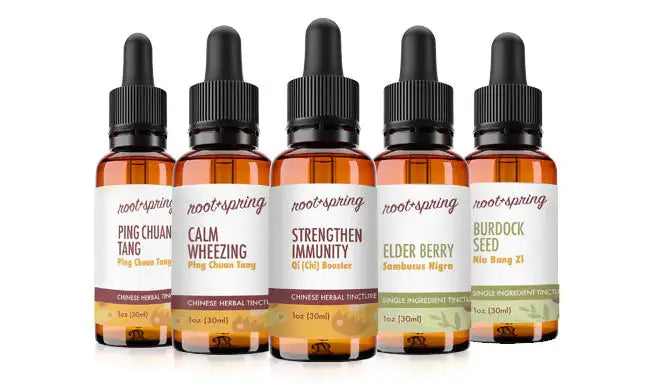
You can browse more options in our respiratory health collection, our full range of herbal tinctures, and our cold and flu season support picks. For more everyday herbs worth knowing, see our list of the top 10 Chinese herbs for everyday wellness.
Everyday habits that help your throat
- Sip warm water through the day rather than icy drinks, which many Chinese families avoid when the throat feels off.
- Run a clean humidifier at night once the heat comes on.
- Gargle with warm salt water in the morning and evening.
- Rest your voice when you can, and speak rather than whisper, which can strain the throat more.
- Cut back on spicy, fried and very salty food for a few days.
- Get to bed early. Our fall wellness routine has more ideas for staying well as the weather turns.
When should you see a doctor for a sore throat?
See a doctor if a sore throat comes with a high fever, trouble swallowing or breathing, white patches or pus on the tonsils, a rash, or symptoms that get worse or do not improve after a few days. These can be signs of strep throat or another infection that needs medical care, not herbal tea.
The CDC notes that viruses cause most sore throats. Still, about 1 in 10 adults and about 3 in 10 children with a sore throat have strep throat, which is caused by bacteria and needs a test and treatment from a provider. Strep is most common in children aged 5 to 15.
Signs that point toward strep
- A sore throat that comes on very quickly
- Pain when swallowing
- Fever
- Red, swollen tonsils, sometimes with white patches or streaks of pus
- Tiny red spots on the roof of the mouth
- Swollen lymph nodes in the front of the neck
A cough, runny nose, hoarseness or pink eye usually suggest a virus instead, according to the CDC.
Get care right away if you notice
- Difficulty breathing or swallowing
- Blood in saliva or phlegm
- Excessive drooling in a young child
- Signs of dehydration
- Joint swelling and pain, or a rash
- A fever of 100.4°F (38°C) or higher in a baby under 3 months old
Our throat remedies are for comfort while your body does its own work. They are not a replacement for a strep test or antibiotics when you need them, and they work well alongside whatever your doctor recommends. If you take prescription medicine, ask your pharmacist before adding herbal syrups or tablets.
Frequently asked questions
What is the best Chinese remedy for a sore throat? For most people, Nin Jiom Pei Pa Koa is the most familiar ready-made option, and Asian pear tea with rock sugar is the classic home remedy. Both are traditionally used to soothe and moisten a dry, scratchy throat. The best choice depends on whether your throat feels dry, hoarse or full of phlegm.
How do you take Pei Pa Koa? You can take it straight from a spoon and let it coat your throat, or stir it into warm water or mild tea. Follow the amount on the label. Many people find a dose before bed helpful for a tickly throat at night.
Is Pei Pa Koa safe for kids? The label gives a smaller amount for children, but it contains honey, so it is not for babies under one year old. Check with your pediatrician before giving any herbal syrup to a young child, especially one who takes other medicine.
Why do Chinese people use pear for a sore throat? In Chinese food therapy, snow pear is considered cool and sweet and is said to moisten the Lung and generate fluids. That makes it a natural fit for the dry, scratchy throats common in autumn and winter. Steaming or simmering it with rock sugar is the traditional way to eat it.
Can I use dried Asian pear instead of fresh? Yes. Dried Asian pear slices rehydrate as they simmer and make a light, sweet tea in about 30 minutes. They store well in the pantry, so you can make pear tea even when fresh Asian pears are out of season.
Is monk fruit tea good for a sore throat? Monk fruit has been used in China for about 2,000 years for sore throat and cough, and it is a recognized food and medicine herb there. The tea is naturally sweet and caffeine-free, so it is easy to sip all day. It is a cooling food, so drink it warm if you tend to run cold.
What is the difference between nan xing and bei xing? Both are Chinese apricot kernels, often sold as Chinese almonds. Nan xing (sweet or south almond) is large and mild and is used freely in soups. Bei xing (bitter or north almond) is smaller, stronger and contains more amygdalin, so it is used only in small amounts and should never be eaten raw.
Does snake bile syrup really contain snake bile? Yes, snake bile is a traditional ingredient in this southern Chinese remedy, listed on the label alongside fritillary bulb, honey and menthol. If you avoid animal products, choose a plant-based option like monk fruit tea, pear tea or Golden Throat lozenges.
Which remedy is best for losing your voice from talking? Golden Throat lozenges and monk fruit tea are the usual go-tos for a voice worn out by talking or singing. Resting your voice, sipping warm water and using a humidifier help too. If hoarseness lasts more than two or three weeks, see a doctor.
Can I take these remedies with cold medicine? Many people use pear tea and monk fruit tea alongside other care since they are foods. For syrups and tablets, check labels for overlapping ingredients like menthol or licorice, and ask your pharmacist if you take prescription medicine or have high blood pressure.
How long does a sore throat usually last? Most sore throats from a cold ease on their own within about a week. If yours is getting worse after a few days, or comes with a high fever, trouble swallowing or white patches on the tonsils, see a doctor to rule out strep throat.
A scratchy throat is one of those small discomforts that makes everything else harder, and these old family remedies are an easy, gentle way to feel more comfortable. Start with a pot of pear tea or monk fruit tea tonight and keep a bottle of Pei Pa Koa on hand for the season. You can find everything in our herbal broth and tea mixes and raw herb shop, or book a 30 minute consult with our staff herbalist for a plan made for you.
Sources
- About Strep Throat, Centers for Disease Control and Prevention, 2024
- About Sore Throat, Centers for Disease Control and Prevention, 2024
- The Fruits of Siraitia grosvenorii, a Review of a Chinese Food-Medicine, Frontiers in Pharmacology, 2019
- The pharmacology and mechanisms of platycodin D, an active triterpenoid saponin from Platycodon grandiflorus, Frontiers in Pharmacology, 2023
- Licorice Root, National Center for Complementary and Integrative Health, 2025
- Amygdalin, About Herbs, Memorial Sloan Kettering Cancer Center, 2021
- Nin Jiom brand story, Nin Jiom Medicine Manufactory, 2026
This article is for educational purposes and is not medical advice. These statements have not been evaluated by the Food and Drug Administration. Root + Spring products are not intended to diagnose, treat, cure or prevent any disease. Talk with your healthcare provider before starting herbs, especially if you are pregnant, nursing, taking medication or managing a health condition.